TGS factory project fit · Updated August 29, 2026
Toy Gift Supply is a bulk custom plush manufacturer for established brands, retailers, licensed programs and funded merchandise projects. Our standard MOQ is 3,000 pieces per design.
- Required before quotation or sampling: front, side and back views with finished dimensions.
- A single AI-generated image may show the concept, but it is not a production-ready drawing.
- Buyers must own the original character or have authorization to manufacture it.
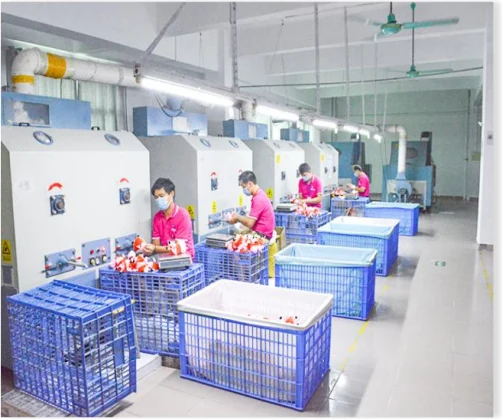
Filling affects the final hand feel, shape, balance and recovery of a custom plush toy. Buyers should approve the finished sample—not only the raw material name.
The outer fabric gets most of the attention. The filling determines how the plush toy actually feels.
A product can have accurate embroidery, attractive colors and a well-developed pattern, yet still disappoint if the filling is uneven, too soft, too hard or unable to recover after shipping compression. For buyers, the correct decision is not simply “polyester or recycled.” It is a complete filling specification that connects material, finished weight, distribution, internal construction and packaging.
The Four Jobs of Plush Toy Filling
Before selecting a material, define what the filling must achieve in the finished product.
1. Hold the intended shape
The filling supports the head, body, arms, legs, ears and other three-dimensional sections. A standing mascot usually needs more structural support than a sleeping pillow plush. A round character needs even distribution, while long limbs may require separate filling sections.
2. Create the correct hand feel
Buyers often request a product that is “soft,” “premium,” “squishy,” “firm” or “weighted.” These words are useful for direction, but they should be confirmed with a physical reference or approved sample because different buyers may use the same word for very different results.
3. Recover after compression
Plush toys are frequently compressed for packing and international transportation. The approved filling structure should allow the product to return close to its intended shape after unpacking, reshaping and resting. This must be tested with the real fabric, pattern, filling weight and packaging method.
4. Support safe and repeatable production
The filling must remain contained inside the product, and bulk units should feel consistent with the approved sample. Products intended for children also need market-specific evaluation of the complete construction, including seams, accessible components, age grading and applicable testing.
Virgin Polyester Fiberfill: The Standard Starting Point
Polyester fiberfill is widely used for standard stuffed animals, character plush, mascots, promotional toys, plush keychains and retail collections. Lightweight fibers are opened and distributed through the product during filling.
Main advantages
- Lightweight and soft
- Firmness can be adjusted through fill weight and distribution
- Works with many pattern shapes and fabric types
- Can be placed into narrow arms, legs and shaped sections
- No dedicated filling mold is required
- Suitable for both small and large plush designs
Where it works well
- Standard retail stuffed animals
- Character and mascot plush toys
- Promotional plush and corporate gifts
- Soft dolls and pillow-style plush
- Mini plush keychains and bag charms
What buyers should watch
The material name alone does not guarantee the finished result. Hand feel also depends on fiber grade, fiber opening, fill weight, pattern shape, fabric stretch and how evenly the filling is distributed.
Too little filling can make the product look collapsed. Too much can distort embroidery, stretch seams and create an unexpectedly hard feel. The approved sample should therefore include a confirmed finished weight or fill standard—not only a note saying “make it soft.”
Recycled Polyester Fiberfill: The Sustainability Option
Recycled polyester filling is suitable for brands developing recycled-content merchandise or reducing the use of virgin material. Its finished hand feel can be similar to conventional polyester, but performance depends on the selected grade, processing and construction.
Main advantages
- Supports a recycled-material product strategy
- Can be used in many standard plush constructions
- Can provide a familiar fiberfill feel
- May support documented recycled-content claims when the supply chain is properly verified
What buyers need to confirm
- The actual recycled-content percentage
- Whether the filling, outer fabric or both are recycled
- Available scope and validity of material documentation
- Whether certification applies to the material supplier, production facility or finished product
- How the claim will be worded on packaging, labels and product pages
The Textile Exchange Recycled Claim Standard and Global Recycled Standard are chain-of-custody systems for recycled materials. GRS also includes additional processing, social, environmental and chemical requirements. Certification should be checked against the actual supplier and order route rather than assumed from an unrelated certificate.
Sample checks
Compare the intended recycled filling with the standard option for softness, loft, resilience, odor, surface smoothness, visibility through light-colored fabrics and recovery after compression. Approve the finished toy, not only a raw filling sample.
Foam Beads: For Squishy and Beanbag-Style Plush
Foam beads create a more fluid, movable feel than conventional fiberfill. The particles shift inside the product when squeezed or repositioned instead of holding a fixed fluffy structure.
Where this structure may fit
- Beanbag-style plush
- Squishy cushions and novelty products
- Selected collectible designs
- Decorative character pillows
Important construction considerations
Loose beads should not simply be placed inside a weak outer shell. Depending on the design and market, the product may need a separate inner liner, reinforced seams, controlled filling openings, additional stitching in high-stress areas and inspection for leakage.
The buyer should approve both the external appearance and the way the filling moves inside the sample. A product that is intentionally fluid may not hold the same outline as a fiber-filled mascot.
Weighted Pellets and Fiberfill: A Specialty Hybrid
Weighted plush normally combines standard fiberfill with pellets placed in selected internal areas. The pellets may sit in the lower body, hands, feet or a secure pouch in the seated base. The fiberfill maintains the plush shape while the pellet section adds localized weight.
Potential benefits
- Helps a seated plush remain stable
- Creates a heavier, more substantial hand feel
- Can improve balance in selected character designs
- Supports some collectible and comfort-oriented product concepts
Important limitations
Additional weight affects seam stress, balance, packaging strength, shipping cost and drop behavior. Pellets should be controlled inside a secure internal compartment rather than distributed loosely throughout the toy. The complete design and intended use must be assessed before this structure is approved.
Filling Material Decision Matrix
| Criterion | Polyester fiberfill | Recycled polyester fill | Foam beads | Weighted hybrid |
|---|---|---|---|---|
| Typical hand feel | Soft and adjustable | Soft and adjustable; grade-dependent | Fluid and squishy | Soft with localized weight |
| Shape retention | Good when evenly filled | Good when correctly specified | Lower by design | Good with controlled layout |
| Firmness adjustment | Relatively easy | Relatively easy | Controlled by bead volume | Requires balancing of fiber and pellet weight |
| Compression recovery | Generally good; test the real pack | Must be sample-tested | Shape remains movable | Depends on fiber, pouch and packaging |
| Sustainability positioning | Limited | Stronger with verified documentation | Depends on bead material | Depends on the full material combination |
| Internal construction | Standard | Standard | More demanding | More demanding |
| Typical application | Retail plush, mascots, keychains | Recycled-content programs | Beanbag and squishy products | Seated or weighted plush |
| Buyer priority | Softness, consistency and cost | Documentation and finished feel | Containment and movement | Balance, seam strength and finished weight |
Three Tests to Run Before Bulk Production
1. Compression recovery test
Pack the pre-production sample using the intended production packaging. When compression or vacuum packing is planned, test the exact bag, compression level and holding period.
- Open the package.
- Reshape the toy by hand.
- Allow it to rest for the agreed period.
- Check the head, body, limbs, fur and embroidered areas.
- Compare the result with the approved uncompressed sample.
- Permanent flattening or lumpy sections
- Twisted limbs or an unstable seated base
- Distorted facial embroidery
- Poor recovery in the head, ears or tail
- Long-pile fur that remains visibly crushed
2. Seam and leakage check
Inspect the closing seam, curved seams, narrow limbs and any internal bead or pellet compartments. Check whether fibers, beads or pellets can escape and whether the internal pouch moves out of position.
For U.S. children’s toys, ASTM F963-23 is the mandatory federal toy safety standard under 16 CFR part 1250. Applicable sections depend on the actual product. Stuffing materials, stuffed and beanbag-type toy construction, small parts and other requirements may be relevant and should be confirmed with an appropriate testing plan.
3. Finished weight and balance test
Record the approved sample’s finished weight and evaluate whether it sits or stands as intended. A heavy head, uneven lower body or inconsistent pellet pouch can make units fall to one side.
For bulk production, use an agreed finished-weight tolerance based on the approved design instead of relying only on subjective hand feel.
How to Choose the Filling in Six Steps
- Confirm the user and sales market. State the target age, country or region, sales channel and whether the item is intended as a toy, cushion, decoration, collectible or keychain.
- Define the target hand feel. Choose very soft, standard soft, firm, squishy, weighted or pillow-like. Supply a physical reference when possible.
- Confirm size and target finished weight. Two products with the same height can require different filling because their head size, limbs, fabric stretch and pattern volume differ.
- Select the filling structure. Decide whether the product needs full fiberfill, recycled fill, an inner bead liner, weighted pouches or different firmness in separate sections.
- Approve a real sample. Review shape, feel, weight, balance, compression recovery, filling distribution and seams.
- Lock the production specification. Record the fill type, recycled-content requirement, approved weight, internal pouch layout, packaging method, target market and approved reference sample.
Market and Documentation Notes
Filling is only one part of compliance. The finished product, target age, attached components, labels and intended market determine which rules and tests apply.
- United States: ASTM F963-23 is incorporated into the mandatory toy standard. Children’s products subject to applicable rules generally require third-party testing and a Children’s Product Certificate.
- European Union: The existing Toy Safety Directive remains applicable during the transition to Regulation (EU) 2025/2509. The new regulation entered into force on 1 January 2026 and starts applying on 1 August 2030.
- Recycled-content claims: Confirm the actual transaction and chain-of-custody documentation before using GRS, RCS or percentage claims in consumer-facing materials.
Official reference sources
- U.S. CPSC: Toy Safety Business Guidance
- U.S. CPSC: Small Parts Guidance
- European Commission: Toy Safety
- Textile Exchange: RCS and GRS
These sources explain general regulatory and certification frameworks. A qualified laboratory or compliance adviser should confirm the requirements for the final product and target market.
How do filling materials affect a bulk custom plush order?
A plush toy filling materials decision affects hand feel, weight, shape recovery, packing volume and sample approval. Buyers comparing polyester fiberfill for plush toys, recycled filling or weighted structures should test the actual construction at the intended finished size.
Filling is one part of a complete factory brief. TGS also requires three-view artwork with dimensions and a planned quantity of at least 3,000 pieces per design.
Continue your sourcing plan
Use these guides to connect filling selection with material approval, sample testing, size, price and MOQ.
Frequently Asked Questions
What is the most common filling for custom plush toys?
Polyester fiberfill is a common starting point for standard retail plush because it is lightweight, adjustable and suitable for many shapes. The final result still depends on fiber grade, fill weight, fabric stretch and pattern construction.
Can recycled polyester filling feel as soft as virgin polyester?
It can, but buyers should approve the finished sample rather than relying only on the material name. Fiber grade, opening, fill weight and construction all affect softness, loft and recovery.
How much filling does a plush toy need?
There is no universal amount based only on height. Pattern volume, head-to-body ratio, fabric stretch, desired firmness and internal components all affect the required fill. Use the approved sample weight as the production reference.
Can foam beads be used in children’s plush toys?
They may be used only when the complete design, inner containment, seams, age grading and target-market requirements are properly evaluated. Loose beads or pellets must not become accessible through intended use or applicable testing.
Why does a plush toy become lumpy after shipping?
Common causes include uneven filling, insufficient fiber opening, narrow pattern sections, excessive compression, inconsistent finished weight or a packaging method that was not tested with the approved sample.
Can custom plush toys be vacuum packed?
Some designs can be compression packed, but the actual pre-production sample should be tested using the intended bag, compression level and storage period. Structured shapes, long fur, electronics and weighted components may need different packaging.
Need a Filling Recommendation?
Send your character artwork, target size, age grade, sales market, desired hand feel, quantity and packaging method. We can review the structure and prepare a sample for approval before bulk production.