Why buyers should not approve plush color from a screen alone
Plush-maker communities repeatedly run into the same problem: a color that looks correct on a monitor can look darker, warmer, cooler or muddier once it is produced in minky, faux fur or embroidery thread. The practical solution is to compare physical swatches under consistent lighting and then approve the finished plush sample.
You can also watch real TGS plush products on TikTok @fluffyworld_toys to see how pile, embroidery and lighting affect the visual result. Video is useful supplier evidence, but it does not replace the physical material and sample approval for your own project.
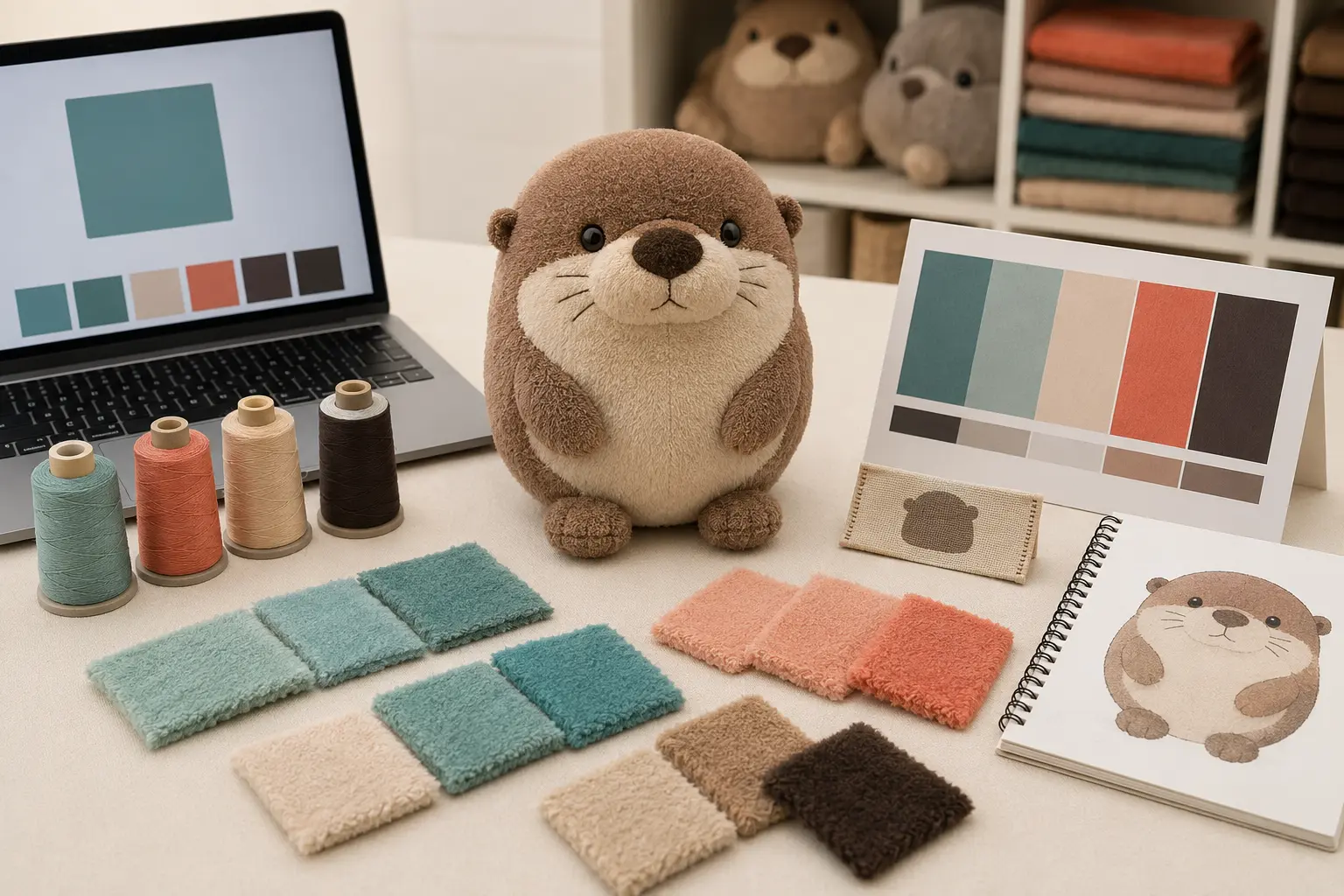
Illustrative color-approval workstation, not a measured result: the screen reference starts the conversation, while actual fabric, thread, label and finished-sample references control the physical decision.
Why a Plush Toy Color Changes from Screen to Sample
A screen emits colored light. Plush fabric, thread and paper reflect ambient light. The physical result also changes with surface shape: short pile may look relatively even, long pile creates light and dark zones as fibers turn, and embroidery thread produces directional highlights.
This means a buyer can provide the correct brand HEX value and still receive a sample that looks warmer, duller or darker than the laptop reference. The correct response is not to approve by email wording such as “make it a little more blue.” Convert the intention into controlled physical references and record which material each reference applies to.
Available plush fabrics and embroidery threads are manufactured material ranges, not liquid colors mixed independently for every small project. A named color standard improves communication, but the final acceptance should be based on the approved physical swatch and plush sample. Toy Gift Supply does not invent a universal tolerance that applies to every fabric, pile and viewing condition.
One Character Uses Several Color Systems
| Component | What affects appearance | Useful approval evidence |
|---|---|---|
| Short-pile plush | Fiber color, density, pile direction and backing | Labeled swatch plus the finished sample in the intended orientation |
| Long-pile fur | Tip and root color, fiber direction, trimming and shadow | Combed and reversed-pile views under consistent light |
| Embroidery thread | Sheen, stitch direction, density and surrounding fabric | Thread card plus actual embroidery on the selected fabric |
| Woven or printed label | Yarn or ink, weave, base material and small detail | Physical label sample at production size |
| Hangtag or box | Paper white point, ink, coating, lamination and texture | Printed proof or finished packaging sample on named stock |
The goal is usually a coherent approved color family across materials, not the false claim that every surface will reflect light identically. If a brand-critical face color must be especially close, identify that priority before the sample room selects materials.
A Seven-Step Color-Matching Workflow for Custom Plush Manufacturing
Record the source reference
State whether the input is RGB, HEX, CMYK, a named Pantone reference, an existing product, a printed standard or a fabric sample.
Map every color zone
Mark the body, muzzle, ears, clothing, embroidery, label and packaging colors on consistent front, side and back artwork.
Select real production materials
Review available fabric and thread options using supplier codes or labeled swatches rather than untracked phone photos.
Approve embroidery on the actual fabric
A thread card alone cannot show how the stitch will read next to long pile, dark backing or a contrasting outline.
Review the complete sample
Check color with the final shape, pile direction, seams, stuffing, accessories and adjacent materials in place.
Sign and retain references
Identify the sample, swatches, artwork revision, material codes, date and authorized approver. Keep both buyer and supplier records.
Define reapproval triggers
Review again when the fabric code, dye lot route, thread, pile length, artwork, supplier, label material or packaging finish changes.
Which Approval Answers Which Question?
| Approval item | What it can confirm | What it cannot confirm |
|---|---|---|
| Screen artwork | Color-zone intent, layout and version | Physical fabric, pile or thread appearance |
| Named color reference | A clearer target than “dusty teal” or a phone photo | Identical appearance across textile, thread and paper |
| Fabric and thread swatches | Actual material direction before sampling | Complete appearance on the stuffed three-dimensional toy |
| Finished plush sample | Combined color, shape, pile, embroidery and adjacency | Automatic approval after a material or process change |
| Retained production reference | The agreed physical benchmark for the specific project | A permanent standard unaffected by age, light or storage |
How to Review Color Without Creating a Dispute
- Use neutral, consistent lighting and avoid judging next to a brightly colored wall.
- Compare pile in the normal product direction and after lightly brushing it.
- Check the face, body and embroidery together rather than approving isolated swatches only.
- Photograph the reference for records, but do not let a phone photo replace the physical sample.
- Write comments by component and location: “body fabric option B,” not “the whole toy is wrong.”
- Confirm whether a revision is required before bulk production, then update the approval record.
The broader custom plush sample approval checklist covers shape, measurement, seams, embroidery position, accessories and packaging. This page owns the color-specific workflow and should support—not replace—that full review.
Color Information to Send for a Custom Plush Quote
- Consistent front, side and back artwork with named color zones
- Named Pantone references or other controlled standards when available
- Physical brand, fabric or thread references that must be compared
- Target plush size, pile length and material direction
- Embroidery, appliqué, printed-fabric and accessory color requirements
- Label, hangtag and packaging artwork that uses the same brand colors
- Quantity per design, target market and required delivery date
- The person authorized to approve the final physical sample
Toy Gift Supply's standard MOQ is 3,000 pieces per design. Product specifications and available materials are confirmed during project review. If the concept still consists of one AI-generated front image, first prepare the consistent production views described in our AI artwork and all-plush construction guide.
Frequently Asked Questions
Can a plush factory match a HEX or RGB color from a screen?
HEX and RGB can communicate design intent, but they are not complete physical acceptance standards. Approve actual fabric and thread swatches plus the finished plush sample.
Should I provide Pantone colors for a custom plush toy?
A named Pantone reference is more controlled than a color name such as teal or coral. For soft goods, pair it with an approved physical swatch because material availability and texture affect the result.
Why can embroidery look different from the plush fabric?
Embroidery thread reflects light differently from matte plush. Stitch direction, sheen, density and surrounding pile can make closely matched colors appear different.
What should be retained after color approval?
Keep the signed physical sample, labeled fabric and thread references, artwork revision, supplier or material code, approval date and consistent record photographs.
Does color approval replace the full sample approval?
No. The complete sample also needs shape, dimensions, seams, embroidery position, accessories, labels, balance and packaging review.
Why can plush color look different in photos or TikTok videos?
Camera white balance, screen settings, lighting, pile direction and fabric sheen can all shift the appearance of a color. Use photos and videos to review general workmanship, then use physical swatches and the approved sample for final color decisions.
Sources and Terminology
Pantone describes its systems as a color language for communication across design and production, and provides a dedicated textile color system for fashion and soft goods. This guide uses named color standards as communication tools; it does not claim that a digital value alone guarantees a physical textile result.
Color Approval Starts Before the Physical Sample
For custom plush from artwork projects, screen colors are only a starting reference. A custom plush from character design brief should identify Pantone targets for fur, short-pile fabric, embroidery and accessories whenever color consistency matters. The custom plush front side back drawing should use the same color callouts across every view so the sample team is not forced to guess between inconsistent images.
Continue the controlled approval route
Need color matching for a custom plush sample?
Send consistent artwork, target size, named color references, physical swatch details, quantity per design, market and packaging request.