TGS factory project fit · Updated August 29, 2026
Toy Gift Supply is a bulk custom plush manufacturer for established brands, retailers, licensed programs and funded merchandise projects. Our standard MOQ is 3,000 pieces per design.
- Required before quotation or sampling: front, side and back views with finished dimensions.
- A single AI-generated image may show the concept, but it is not a production-ready drawing.
- Buyers must own the original character or have authorization to manufacture it.
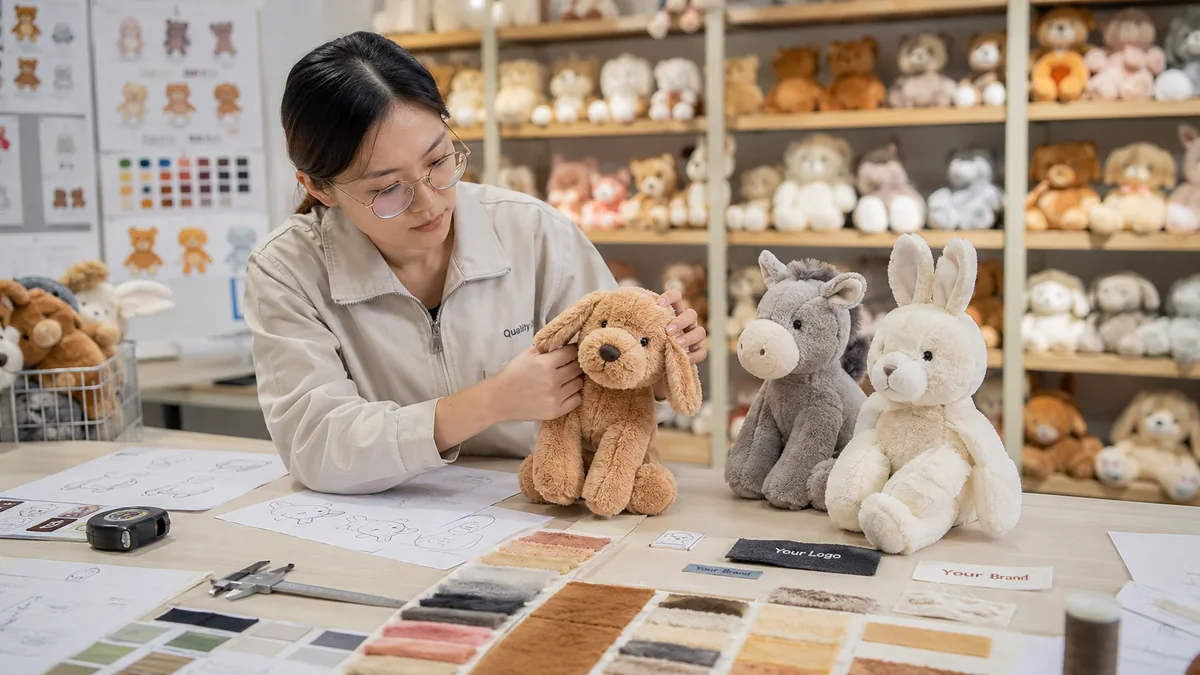
Can you turn a drawing into a plush toy?
Yes, a custom plush manufacturer can develop a plush sample from clear character artwork, but the factory needs enough information to interpret the design in three dimensions. Buyers often search for custom plush from drawing, custom plush from artwork, turn drawing into plush toy or turn character into plush toy; all of these projects begin with the same requirement: production-ready visual information.
What artwork is needed for custom plush manufacturing?
The most useful pack includes front, side and back views, finished dimensions, Pantone references, embroidery notes, removable accessories and any details that must not be simplified. A custom plush front side back drawing gives the pattern maker a much clearer basis for proportion and seam planning.
Can a factory reproduce any game, cartoon or movie character?
No. Artwork quality and intellectual-property rights are separate issues. TGS manufactures buyer-owned original characters and projects where the buyer has the necessary authorization. A recognizable third-party game, film, cartoon or brand character should not be treated as open artwork for production without the required rights or permission.
From character design to plush prototype
A plush toy prototype from drawing is used to check silhouette, expression, fabric direction, embroidery, accessories and scale before bulk production. Sample cost is quoted after artwork review because complexity varies by design.
Complete three-view artwork reduces repeated sample changes and is required before TGS can issue a factory quotation.
Send your artwork, target size, quantity per design, destination market and packaging request. We can review the project against our 3,000-piece-per-design MOQ and current sample-development baseline before you commit to bulk production.
Separate must-keep details from details the factory can simplify
Mark priorities on the three-view file before sampling. A pattern maker should not have to guess which feature makes the character recognizable. “Can simplify” authorizes a discussion, not an unapproved change.
| Priority | What to mark on the artwork | How to approve it |
|---|---|---|
| Must keep | Signature silhouette, eye spacing, mouth shape, color boundaries, logo proportions and any licensed design restrictions | Label the exact reference and compare it with front, side and back sample photos. Any deviation needs buyer approval. |
| Can simplify after review | Tiny decorative lines, hidden details or accessory construction where alternatives are acceptable | Request the proposed embroidered, printed, appliqué or sewn alternative and approve the revised drawing before treating it as final. |
| Needs a physical sample | Head depth, ear support, limb pose, pile direction, tiny facial details, hardware balance and stuffing feel | Check at the intended finished size; approve the actual sample rather than relying on a flat render. |
Production-ready artwork checklist
- Matching front, side and back views. Use the same character revision and consistent proportions. Show the depth of the head, body, ears, tail and accessories.
- Finished dimensions. Identify the measurement points, units and whether the stated height includes ears, hanging loops or hardware.
- Color references. Label color areas and provide references for discussion. Approve physical fabric or thread choices during development; screen colors alone do not establish a fabric match.
- Face and logo details. Supply clean detail artwork, placement and size notes. Ask the factory to review the proposed production technique at the actual product scale.
- Materials and construction. Note the desired pile, texture, filling feel, pose, removable parts, keyring/clasp position and features that need sample validation.
- Packaging and market. Include labels, hangtags, barcode space, retail pack, destination and any planned compression. Keep packaging requirements with the product revision.
- Rights and file control. Confirm original or licensed production rights. Name the design, revision, date and approval owner; provide viewable files and any editable/vector assets available.
A polished AI render can help explain the idea, but it may show inconsistent seams, depth or accessories between views. TGS still requires complete front, side and back drawings with dimensions before formal quotation or sampling. If your files are still in progress, use the project-feasibility WhatsApp route to discuss the next preparation steps.
Keep artwork, sample, revisions and approval connected
| Stage | Controlled record | Decision before moving on |
|---|---|---|
| Artwork review | Design ID, three-view revision, dimensions, rights confirmation and priority notes | Resolve conflicting views, missing dimensions and proposed simplifications. |
| First sample | Sample ID linked to the artwork revision; matching photos and measurements | Compare silhouette, expression, fabric, scale, accessories and packing requirements. |
| Revision | Numbered issue list with an annotated photo, requested correction and owner for each point | Distinguish new design requests from corrections; confirm the next sample scope and any quotation changes. |
| Final approval | Approved physical sample/reference, final specification, packaging revision and written decision | Release only the agreed configuration; retain the approved reference for production checks. |
Example file names such as Character-A_Art_R03 and Character-A_Sample_S02 are illustrative identifiers, not TGS customer records. Link the approval to both IDs so a later screenshot cannot silently replace the released file.
What changes when the drawing becomes a mini plush keychain?
Reducing the character to keychain size changes the space available for facial details, seams and hardware. Ask for review at the intended finished size rather than shrinking a large-plush drawing proportionally. Compare the face, attachment position, hanging angle, overall weight and retail card on the sample. Review the custom plush keychain product requirements before selecting the format.
What should be included in a quotation brief?
Send the controlled artwork pack, finished size, quantity per design, destination market, product priorities, packaging plan and timing target. Standard MOQ remains 3,000 pieces per design; sample cost and project pricing are confirmed after artwork review. A single attractive front-view image is not enough for an accurate factory quotation.
If compressed shipping is being considered, identify the details that must recover to the approved appearance and use the vacuum packing and shape-recovery review checklist. Packing approval should reference the same product sample revision.
Continue your sourcing plan
These related guides help buyers prepare artwork, packaging, MOQ and supplier questions before requesting a quote.
Continue to the relevant sourcing page
Review factory capabilities, MOQ, sampling, packaging and quotation requirements for this project route.
Custom Plush Toy Manufacturer in China →Core manufacturer pages
Review our manufacturing services, real factory route and quotation requirements before starting a project.
Need help reviewing this plush project?
Send your artwork, size, quantity, target market and packaging request. Toy Gift Supply can help review the practical sampling and quotation route.