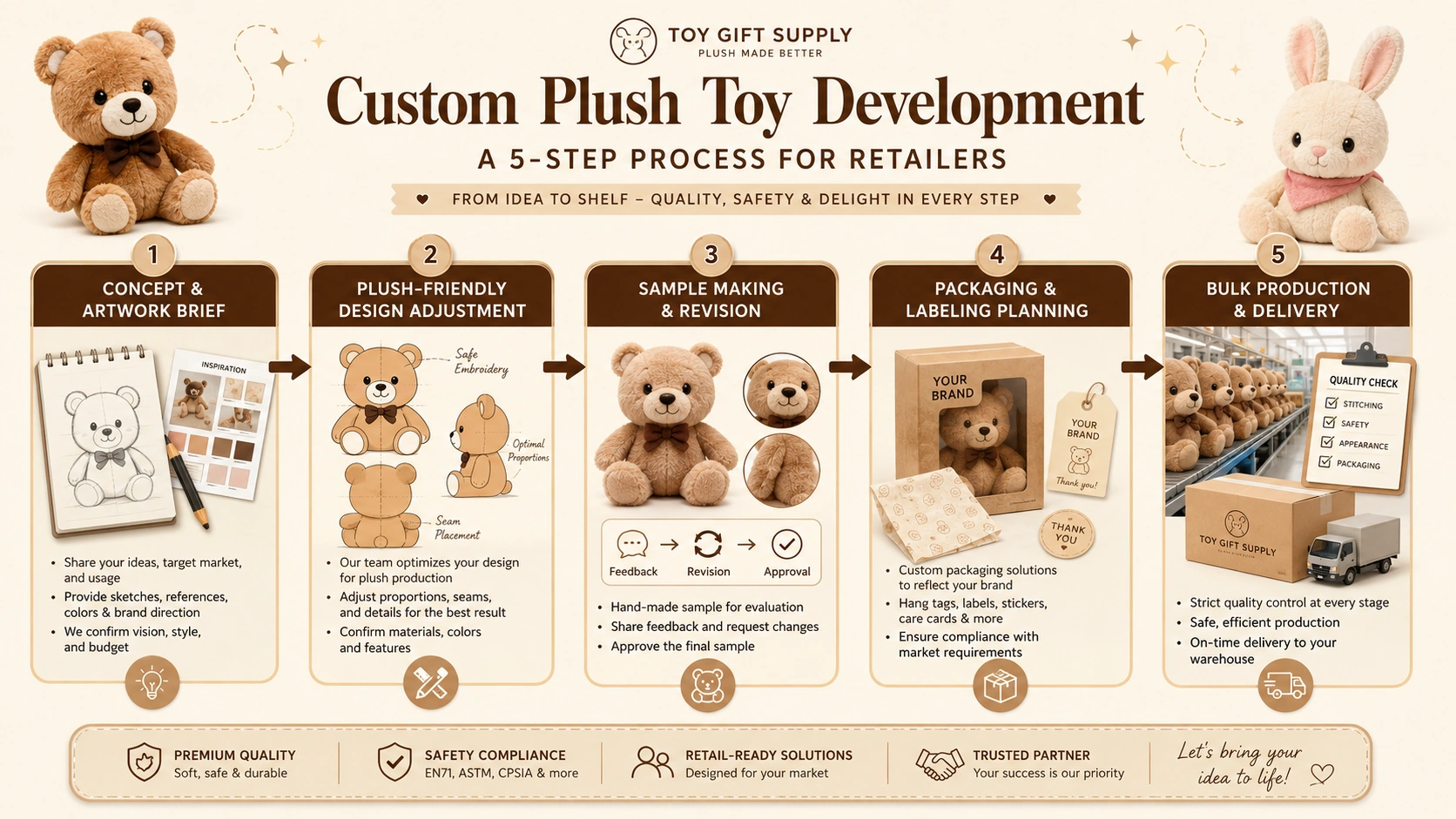
TGS process illustration: each gate must close before the next schedule can be treated as firm.
Usable artwork normally includes three consistent views—front, side and back—plus target dimensions. Typical sample development is 15–20 days. Typical bulk production is approximately 30–35 days after the approved sample and final production details are released. These are planning baselines, not a guarantee for every design.
How long does custom plush manufacturing take?
For a quote-ready project, plan the work as several connected stages rather than one headline number. A simple sewn character using available materials may move close to the baseline. Removable clothing, long-pile fur, complex embroidery, custom packaging, compliance testing or several character designs can create additional approval and production work.
| Stage | TGS planning reference | What must be confirmed |
|---|---|---|
| Artwork review | Before the sample clock starts | Front, side and back views, dimensions, colors, materials, accessories, quantity and market |
| Sample development | Typically 15–20 days | Pattern, fabric, face details, stuffing, accessories and construction |
| Revision and approval | Project-specific | One consolidated feedback file and a controlled approved sample |
| Bulk production | Typically 30–35 days | Approved sample, final materials, labels, packaging, quantity and production release |
| Freight | Separate from production | Named trade term, carton data, forwarder booking, destination and customs route |
When does the sample lead time begin?
The sample lead time should begin after the factory receives a manufacturable brief. A single AI-generated front image does not show side depth, back construction, seam transitions or accessory attachment. For a reliable start date, provide consistent production views, target size, Pantone references where relevant, estimated quantity, packaging direction and destination market.
Use the custom plush artwork checklist before requesting a sample. If the concept mixes vinyl parts with sewn fabric, first check the vinyl-plush versus all-plush guide.
How should buyers plan sample revisions?
Review large structural questions first: silhouette, pose, proportions and balance. Then check fabric, face expression, embroidery, color, accessories, labels and packaging. Send one numbered file with marked photographs and dimensions rather than separate comments across email, WhatsApp and calls. A revision is easier to schedule when the factory can identify exactly which version is current.
- Sample version and review date
- Front, side and back photographs
- One numbered comment per location
- Target dimensions beside measured results
- Reference artwork and approved color callouts
- A clear list of accepted details that must not change
What must be approved before bulk production?
Bulk release should follow physical sample approval, not only a digital photo. Confirm the sample's finished dimensions, face, materials, seam positions, pile direction, embroidery, accessories, labels and packaging. For a multi-SKU range, every design needs its own approval record unless the quotation explicitly says otherwise.
The sample approval checklist provides the full inspection sequence. Buyers should also confirm target-market testing and labeling for the finished product before shipment.
Why is the required arrival date longer than factory lead time?
Factory lead time ends when the approved goods are completed and ready for the agreed handoff. The buyer still needs to allow for booking, pickup or port delivery, export procedures, main transport, destination customs and final delivery. Seasonal launches should work backward from the required warehouse date and include contingency instead of treating the production finish date as the launch date.
Use the EXW versus FOB guide to define the handoff, then coordinate the freight schedule with your forwarder.
Frequently Asked Questions
How long does it take to make a custom plush toy?
TGS typically plans 15–20 days for sample development and approximately 30–35 days for typical bulk production after approval. Revisions, materials, packaging, testing and seasonality can change the schedule.
Does bulk production begin when I pay for the sample?
No. Bulk production begins only after the physical sample and final specifications are approved and the commercial production-release conditions are met.
Is shipping included in the 30–35 day bulk-production estimate?
No. Freight, destination customs and final delivery are separate. Confirm the named trade term and shipping plan before using the factory completion date in a launch calendar.
Can several character designs share one timeline?
They can be coordinated, but each character needs its own artwork, sample and approval record. The final production schedule depends on quantity, shared materials, packaging and factory planning.
Continue your project plan
Need a realistic project schedule?
Send your artwork, target size, quantity per design, market, packaging and required arrival date for review.