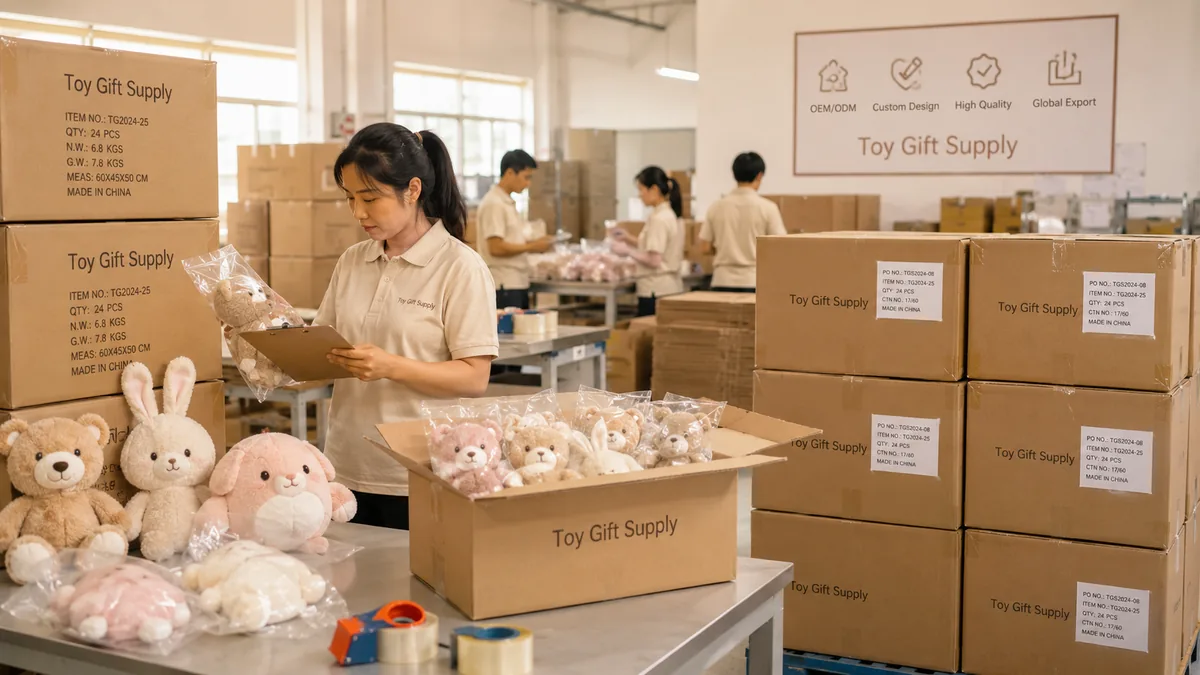
Real TGS packing-area image: carton data and the named handoff point connect the product quotation to the buyer's freight plan.
TGS supports two quotation routes: EXW and FOB. For every bulk shipment, buyers should confirm at least three carton measurements—length, width and height—plus gross weight, carton count and cargo-ready date. Sample shipping is quoted separately and freight is paid by the buyer unless the written quotation says otherwise.
What is the practical difference between EXW and FOB?
| Question | EXW | FOB |
|---|---|---|
| Named point | Factory or other agreed place | Named port of loading |
| Factory handoff | Goods made available at the named place | Goods delivered on board the vessel under the agreed rule |
| Main use | Buyer controls pickup and onward logistics | Sea or inland-waterway shipment with seller handling the agreed origin-to-port scope |
| Buyer still plans | Pickup, export route, main transport, insurance, import and delivery | Main ocean transport, insurance if desired, import and final delivery |
| Critical wording | Exact named place + Incoterms 2020 | Exact named port of loading + Incoterms 2020 |
This table is a commercial planning summary, not a substitute for the official rules or a contract. The International Chamber of Commerce publishes the current Incoterms 2020 rules, which allocate costs, risks and obligations between buyer and seller.
When does EXW make sense for a custom plush buyer?
EXW can work when the buyer already has a freight forwarder or consolidator that can arrange pickup from Dongguan and coordinate the export route. It also gives the buyer one logistics partner across several suppliers. Before accepting the quote, confirm who loads the pickup vehicle, who prepares export documents, the pickup address and the cargo-ready notice procedure.
Do not treat “EXW” as a complete delivery address. The quotation should name the agreed place and the Incoterms version. The buyer's forwarder should review whether the route is workable before production finishes.
When does FOB make sense for a custom plush order?
FOB is a sea or inland-waterway rule. It can suit a bulk order when the seller is responsible for the agreed origin work and delivery on board at the named loading port, while the buyer controls the main ocean freight and destination side. The exact port must be written; “FOB China” is too vague for a controlled quote.
For air, courier or multimodal shipments, ask the freight forwarder which rule is appropriate. The U.S. International Trade Administration's Incoterms overview lists FOB among the four rules for sea and inland-waterway transport.
What should a custom plush shipping quotation include?
- Product, approved specification and quantity per design
- Unit price and total product value
- Named EXW place or named FOB loading port
- Incoterms 2020 stated in full
- Individual packaging and master-carton scope
- Pieces per carton and total carton count
- Carton length, width, height and gross weight
- Cargo-ready date and booking contact
- Excluded costs: main freight, insurance, import duties, destination charges and final delivery unless expressly included
Why do carton dimensions matter so much for plush toys?
Plush goods are light relative to their volume. Freight planning therefore depends on the packed carton, not only the finished toy size or unit weight. Vacuum or compression packing may reduce volume for some designs, but it can affect pile, shape, accessories or retail presentation and must be approved for the actual product.
Lock the final pack-out before booking. The 3PL-ready packaging guide explains SKU labels, carton marks and receiving data, while the production timeline guide separates factory completion from freight time.
What should buyers ask a freight forwarder before paying a deposit?
- Can you collect from the named Dongguan address under this EXW arrangement?
- Which China loading port fits this FOB shipment?
- Is the route sea, air, courier or multimodal, and is the quoted term appropriate?
- Which documents and cargo data do you need from the factory?
- Are destination charges, duties, tax and final delivery included in your freight quote?
- What booking lead time is required before the cargo-ready date?
Frequently Asked Questions
Does TGS provide DDP quotations?
TGS supports EXW and FOB. If you need door-to-door logistics, your freight forwarder can quote the destination route separately using the confirmed carton data and cargo-ready location.
Is sample shipping included in the sample-development cost?
No. Sample shipping is confirmed separately by destination and method, and the buyer covers sample freight unless the written quotation states otherwise.
Can I send my own freight forwarder?
Yes. Provide the forwarder's booking and warehouse or port instructions early enough for the factory to confirm handoff details.
Does an Incoterm decide ownership or payment terms?
Incoterms allocate specified delivery obligations, costs and risks. The sales contract must separately address product ownership, payment, inspection, remedies and other commercial terms.
Continue your landed-cost plan
Need an EXW or FOB plush quotation?
Send the design, quantity, packaging, destination and your forwarder's preferred handoff route.