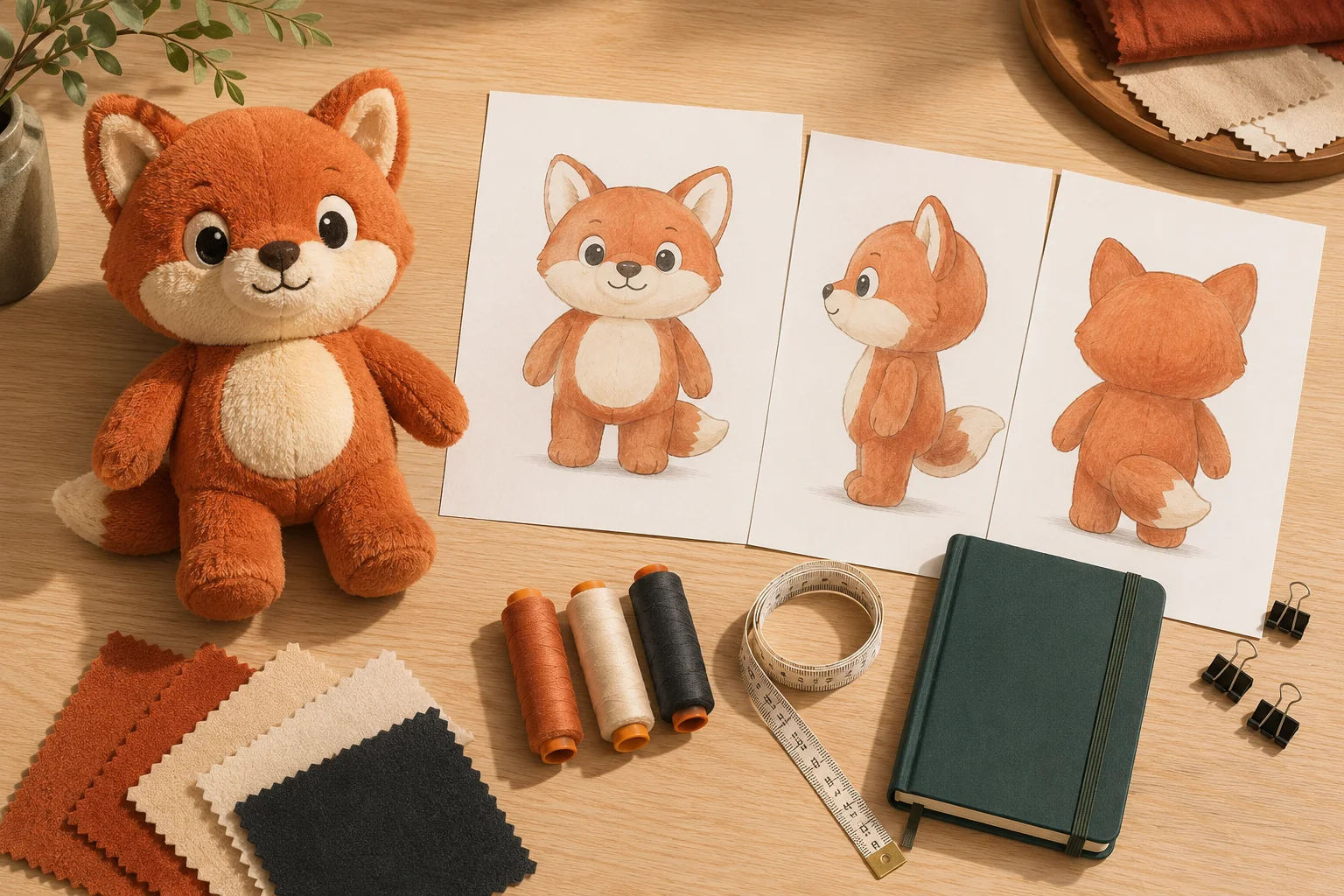
TGS has over 10 years of custom plush manufacturing experience, including long-term OEM work for international brand programs. Our Dongguan factory supports sample development, embroidery, sewing, finishing and packing. Standard MOQ is 3,000 pieces per design. The agenda below is a buyer planning checklist; agree the actual meeting, records and release responsibilities for your project.
Why is sample approval not the whole production instruction?
A physical sample shows the intended product, but it may not reveal every decision needed for a full run. It cannot, by itself, tell a packing team which label belongs to which market or tell purchasing whether a particular swatch is approved for bulk use. Those details need to travel with the sample as a controlled production brief.
This is where a manufacturer's experience becomes useful to a brand team. Ask the supplier to explain how an approved character becomes instructions for each relevant process. TGS's real factory tour shows the production stages involved. The pre-production discussion should connect those stages to your order, not simply repeat a general factory introduction.
Who should contribute to the pre-production review?
Ask for input from the people responsible for design approval, materials, production planning, quality and packing. On the buyer's side, one project owner should consolidate comments from design, merchandising and procurement. Separate commercial approval from visual approval where your organization requires it, but make both decisions visible in the release record.
The meeting does not need to be elaborate. A structured video call and a shared agenda can work if the participants are looking at the same sample version and files. What matters is the written outcome: accepted decisions, open questions, responsible people and the condition for moving forward.
What belongs on the meeting agenda?
| Review area | Question to settle | Record to retain |
|---|---|---|
| Approved reference | Which physical sample and artwork version govern this run? | Dated sample photos and the approved file list |
| Materials | Which fabric, color, thread, filling and accessories are accepted? | Material references and any unresolved sourcing items |
| Character details | Which proportions, face positions and construction details are critical? | Measurement points and agreed visual references |
| Quality review | What is checked, when, and against which acceptance criteria? | Project inspection plan and escalation contact |
| Retail packing | Which product, label, barcode and carton specification belong together? | Approved packing files and version list |
| Release | Are the required design and commercial approvals complete? | Release decision, owner and remaining hold points |
How should the team handle a last-minute change?
Describe the change against the current approved version. “Make the face cuter” is not a production instruction. Mark the location, state what needs to move or change and explain which already-approved details must remain untouched. If the change affects fabric, embroidery, pattern, packaging or testing, ask for the consequences before authorizing it.
For example, a hypothetical request to move a mascot's eyes after sample approval may affect embroidery placement and the approved expression. The team should decide whether an updated reference is needed before the affected work continues. Do not rely on a new WhatsApp message alone to replace the formal file set. Keep informal discussion easy, then capture the final decision in one place.
What should be checked early in the bulk run?
Agree whether an early production check is appropriate and what evidence the buyer should receive. Compare representative output with the approved sample and specification, especially where small differences affect the character's face or silhouette. The purpose is to identify a repeated issue while there is still an opportunity to correct the process.
Define how nonconforming work is identified and who approves corrective action. Avoid a vague request to “make everything perfect”: plush has textile variation, so the team needs clear measurement methods and agreed acceptance references. Our bulk plush quality consistency guide explains how to frame those questions.
How does the meeting support US and European retail delivery?
Include the buyer's destination-market and retailer instructions before production release. Confirm who provides final label wording, who checks artwork and which product evidence is required before shipment. Keep country-specific compliance decisions with the appropriate buyer and testing specialists; a pre-production meeting organizes those responsibilities but does not replace their review.
Packaging deserves its own sign-off. A correct plush toy with the wrong retail label can still create a receiving problem. Review the retail packaging guide and confirm SKU allocation, inner packing and carton marks together. Then connect production release to the wider sample-to-shipment timeline.
What is the next step before booking production?
Complete the sample approval checklist, collect the latest file set and list the remaining decisions. For TGS, confirm at least 3,000 pieces per design and provide front, side and back drawings with dimensions for quotation or sampling. You can discuss the process with us first; a complete production brief is needed when moving into formal review.
Frequently Asked Questions
When should a plush pre-production meeting happen?
Plan it after the sample and specifications are sufficiently developed and before bulk release. Use it to resolve remaining production decisions and document any conditions that must be met before work proceeds.
Is a pre-production meeting the same as sample approval?
No. Sample approval confirms the intended product. The pre-production review connects that reference to materials, work instructions, packing, quality checks and release responsibilities for the full order.
Can we change artwork after the meeting?
Raise the request against the approved version and ask for its effect on cost, materials, testing and timing. The affected instructions and approvals should be updated before the changed work proceeds.
Does every project use the same inspection plan?
No. The plan should reflect the design, materials, quantity, intended users and buyer requirements. Agree the inspection points and acceptance references for the particular project.
Prepare your next procurement step
Preparing to move from sample to bulk?
Share your approved sample status, quantity per design and open production questions. Let's organize the next review.