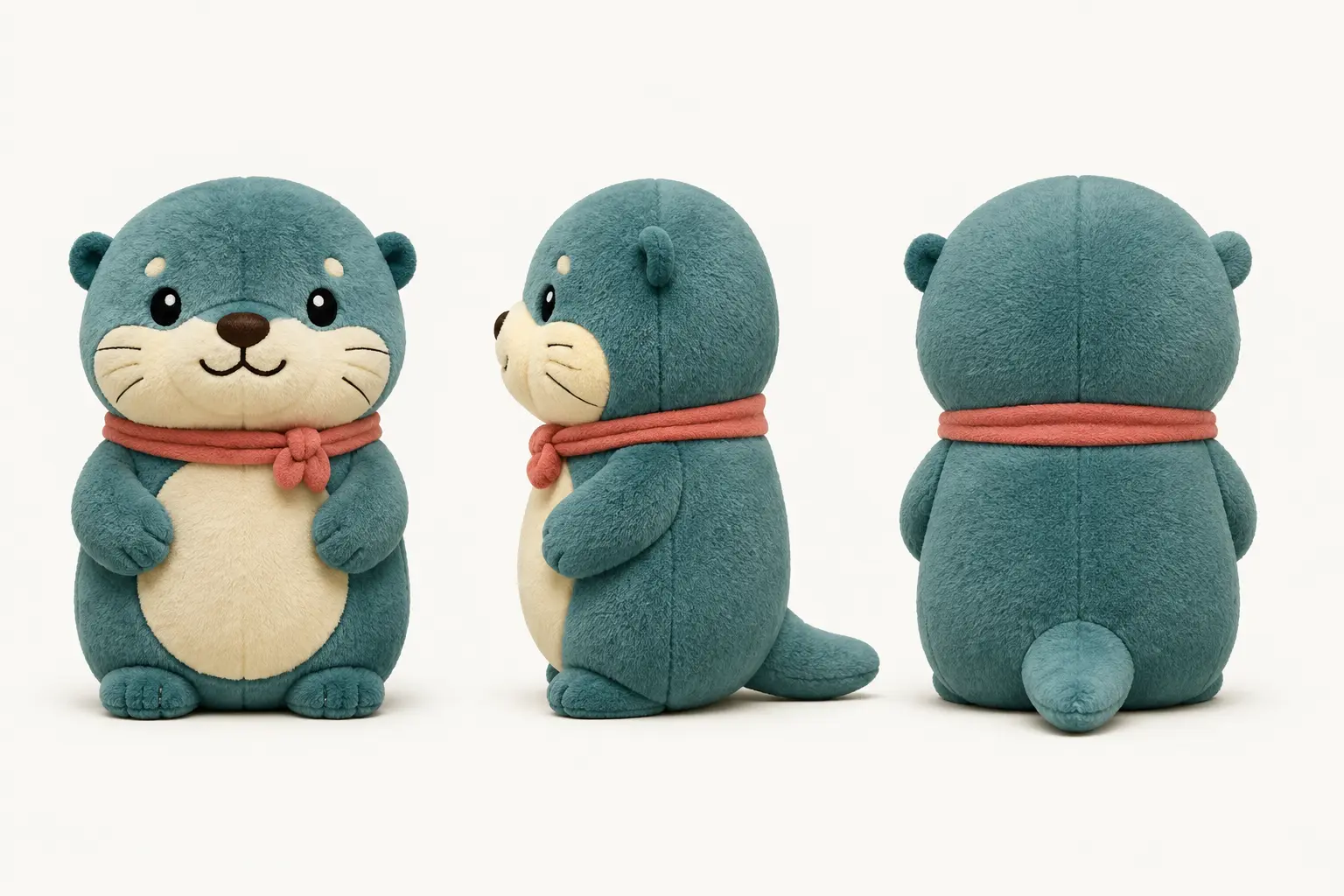
Illustrative production-artwork example, not customer IP: use consistent views, version labels and an authorized approval path.
A sampling pack should contain three consistent views—front, side and back—plus dimensions and color references. Before confidential release, identify one rights owner or authorized licensee, one authorized approver and one current artwork revision. TGS does not support unauthorized reproduction of protected characters.
What does an NDA protect in a custom plush project?
A non-disclosure agreement can define which artwork, specifications, launch information or commercial data are confidential, who may access them, what purpose is permitted and how long obligations continue. WIPO describes an NDA as a contract that controls access to proprietary know-how and how it may be used, including when manufacturers or prototyping partners handle sensitive IP.
Use an NDA before—not after—sharing confidential high-resolution artwork, unreleased character sheets or commercial plans. The agreement should match the parties, countries and project. Obtain qualified legal advice rather than downloading a generic document and assuming it covers every risk.
Does an NDA prove that the buyer owns the character?
No. Confidentiality and ownership are different. A buyer may keep a file secret without owning the copyright or trademark. A factory should not treat a signed NDA as evidence that the sender may manufacture a protected character.
| Control | What it addresses | What it does not prove |
|---|---|---|
| NDA / confidentiality agreement | Access, permitted use and disclosure of defined information | Ownership or merchandise authorization |
| Creator or assignment agreement | Who created the work and which rights were transferred | Factory suitability or product compliance |
| License / authorization | Property, product category, territory, channel and validity scope | Automatic approval of every artwork or product sample |
| Approved artwork and sample record | The production version and physical reference | Legal rights beyond the documented project |
What should an original-character buyer document?
Keep dated source artwork, the creator identity, contracts with designers or employees, trademark or design filings where relevant, and the final manufacturing approval record. If several collaborators developed the character, resolve ownership and approval authority before a factory begins sampling.
For production, use the three-view artwork checklist. Each PDF, AI or PSD set should show a revision name and date so the sample room does not combine details from obsolete files.
What should a licensed plush buyer confirm?
- Rights holder and authorized buyer identity
- Character or property covered by the authorization
- Approved product category, such as plush toys or plush keychains
- Territory and sales channel
- Validity period and order or royalty conditions where applicable
- Required factory, audit, testing or approval steps
- Artwork, packaging and sample approval contacts
- Rules for excess, damaged or obsolete goods and files
The licensed plush supplier verification guide explains why product, market and channel authorization must be checked together. A logo, certificate image or old approval cannot automatically authorize a new buyer, country or sales route.
How should confidential artwork files be controlled?
- Define confidentiality first. Agree which files and discussions are covered before release.
- Limit access. Send only the detail needed for quotation or sampling to the named project contacts.
- Use revision control. Give every artwork set a date and version; mark superseded files obsolete.
- Separate public references from production files. A mood image may explain style, but only authorized original artwork should become the manufacturing reference.
- Record approval. Connect the final digital artwork, physical sample and bulk specification to the same version.
WIPO's 2026 NDA guidance identifies outsourcing and prototyping as situations where confidentiality controls can matter. Its trade-secret resources also emphasize reasonable preventive measures, including NDAs and access control.
Can AI-generated character art be used as the production file?
AI imagery can help communicate a mood or shape direction, but it often lacks consistent side and back construction and may contain unclear provenance. Do not assume that generating an image gives you all rights needed for commercial manufacturing. Confirm the source and permissions, then create original, consistent front, side and back production drawings for the factory.
The AI artwork and construction guide explains why a single rendered front image is insufficient for pattern development.
Frequently Asked Questions
Should I sign an NDA before requesting a quote?
If the files are confidential, agree the NDA before sharing the sensitive content. A basic project description can often be discussed first without releasing the complete artwork pack.
Does TGS make unauthorized copies of famous characters?
No. TGS supports original rights holders and authorized buyers and does not support unauthorized reproduction of protected characters.
Is a license valid in every country and sales channel?
Not automatically. Confirm the property, product category, territory, channel and validity period stated in the authorization.
Is this page legal advice?
No. It is a practical sourcing checklist. Ask qualified counsel to review ownership, licensing, confidentiality and enforceability for the relevant countries and agreement.
Continue the authorized sourcing route
Have an original or authorized plush project?
Send the project category and rights status first, then share controlled production artwork through the agreed route.