TGS factory project fit · Updated August 29, 2026
Toy Gift Supply is a bulk custom plush manufacturer for established brands, retailers, licensed programs and funded merchandise projects. Our standard MOQ is 3,000 pieces per design.
- Required before quotation or sampling: front, side and back views with finished dimensions.
- A single AI-generated image may show the concept, but it is not a production-ready drawing.
- Buyers must own the original character or have authorization to manufacture it.
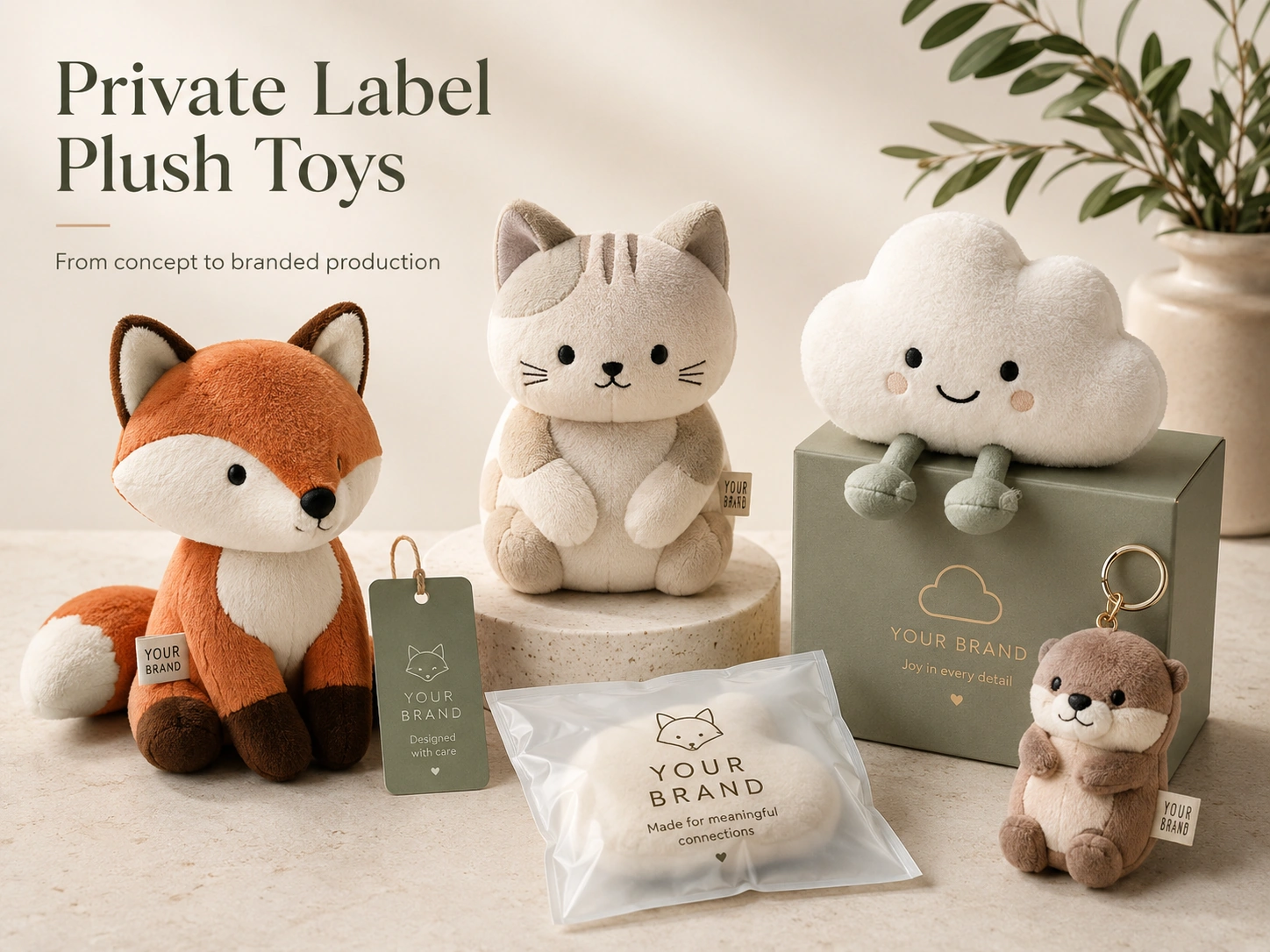
Private label plush projects often start with a concept and grow into a branded product line with samples, labels, packaging and repeat-order planning.
What Private Label Plush Toys Means in a B2B Project
Private label plush toys are not generic retail toys with a logo added at the last minute. In a proper B2B project, the buyer owns or controls the brand direction, and the manufacturer helps turn that direction into a product that can be sampled, approved, packaged and produced at scale.
For many overseas buyers, the goal is not simply to find a factory that can sew a plush item. The goal is to find a partner that understands product positioning, brand presentation, packaging details and the difference between a test order and a long-term private label program.
This page is written for buyers who want to judge whether a supplier is suitable for private label development. It is not written as a retail toy page. The focus is on OEM, ODM and wholesale cooperation for brands, Amazon sellers, gift companies and retailers.
Who Private Label Plush Toys Fit Best
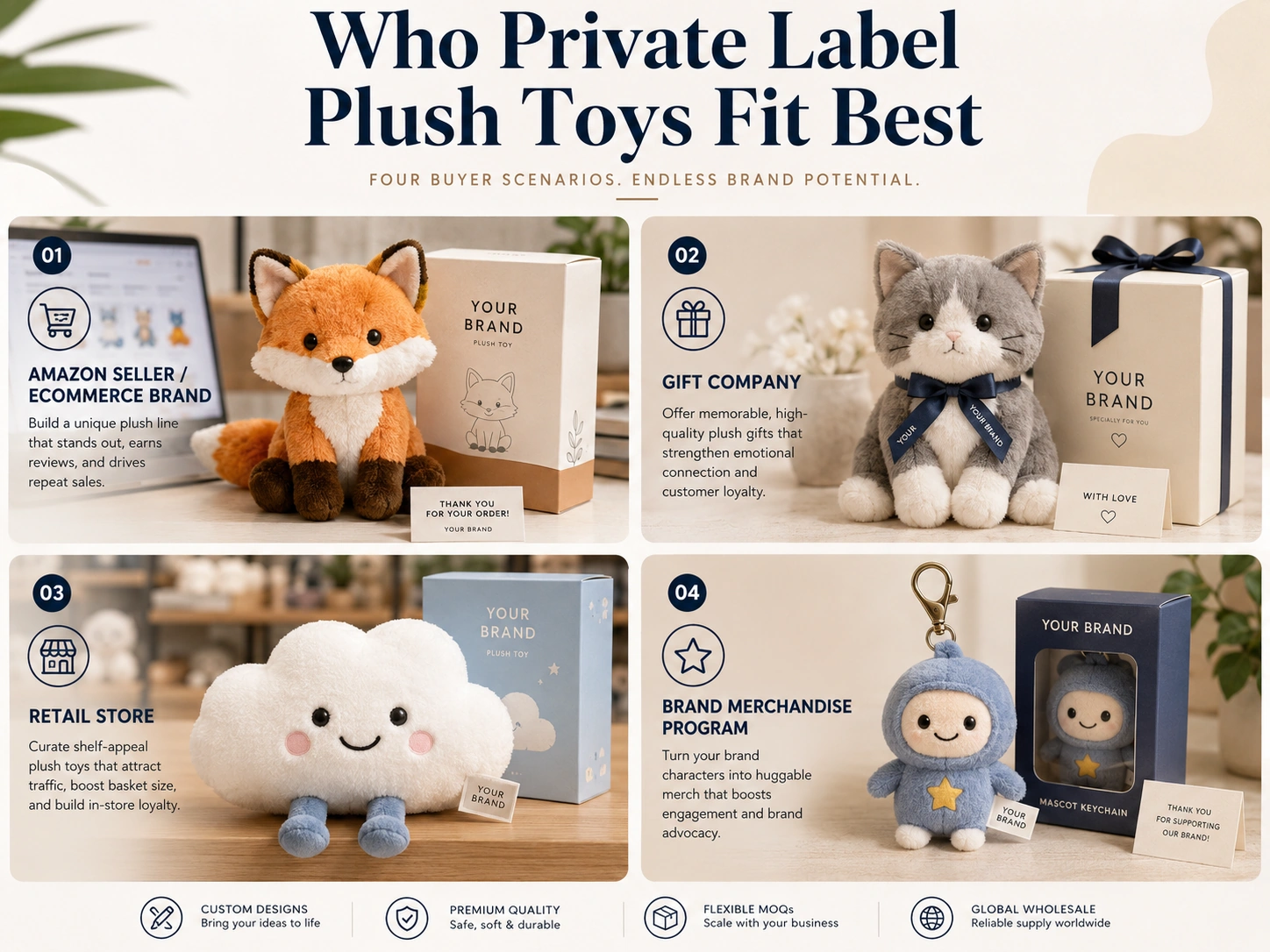
Private label plush toys are especially suitable for Amazon sellers, ecommerce brand owners, gift companies, retail chains, specialty stores, toy distributors, schools and event-based buyers. These buyers usually need products that feel commercially ready rather than factory-generic.
Amazon sellers often want a product that can be tested in a manageable quantity before expanding a catalog. Gift companies need collections that align with brand style and packaging expectations. Retailers may need plush products that work for shelf display, seasonal launches or souvenir programs.
Because each buyer type works differently, the right project structure may include small-batch testing, multi-style planning or a more straightforward bulk run based on an approved sample.
From Design Idea to Sample Development
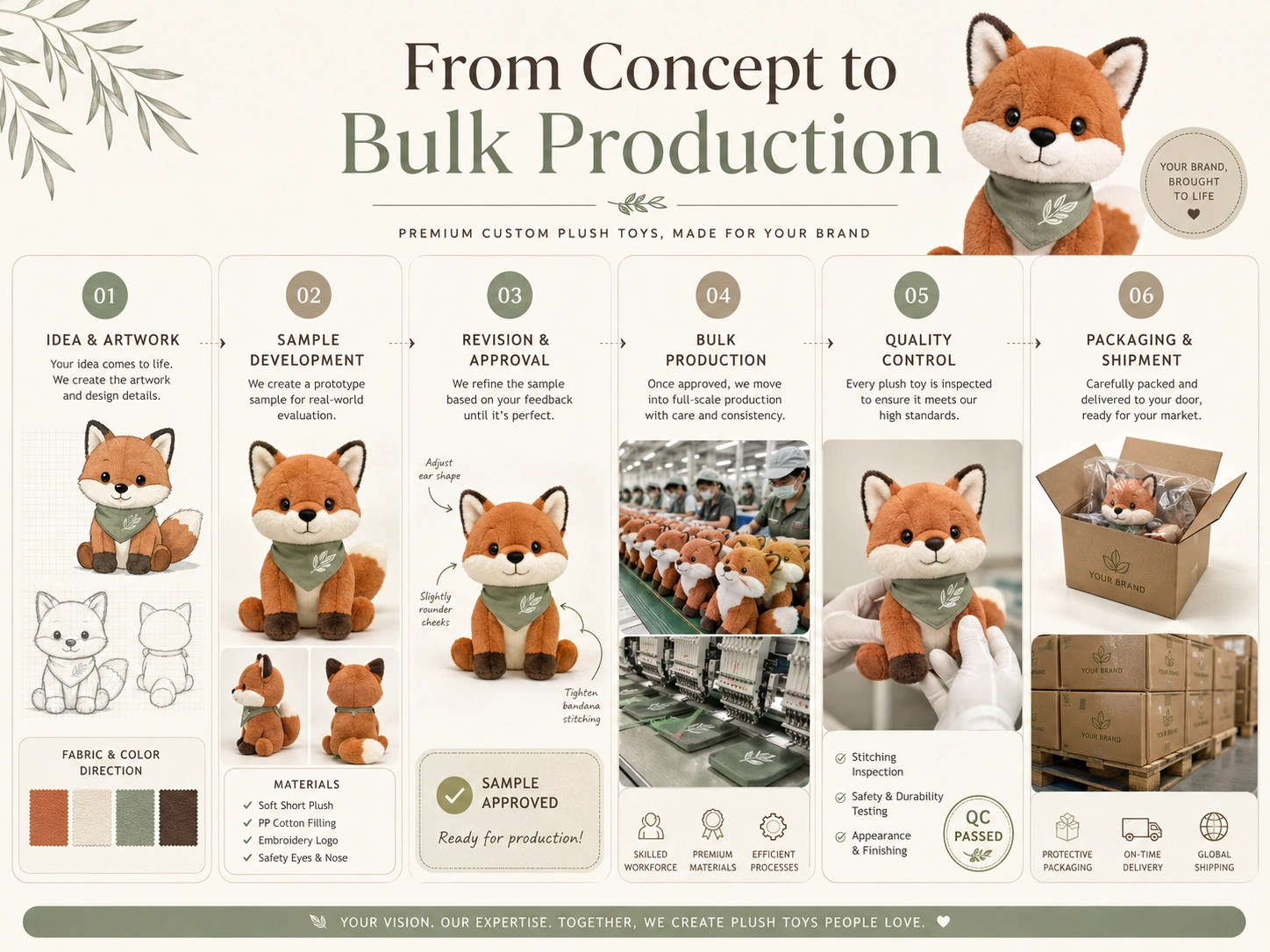
Many private label buyers start with a sketch, a moodboard, a mascot concept or a reference image rather than a fully technical plush drawing. That is normal. The key is whether the supplier can review the idea and explain how it translates into a practical plush product.
At the sample stage, the main questions are usually about size, material, expression, embroidery, accessories and packaging direction. This stage matters because a private label plush line succeeds when the physical sample reflects the intended brand feeling.
A practical sample workflow usually moves from design review to prototype making, then revision, approval and final production confirmation. Clear communication here reduces avoidable surprises later in bulk manufacturing.
Branding Options: Labels, Hang Tags and Packaging
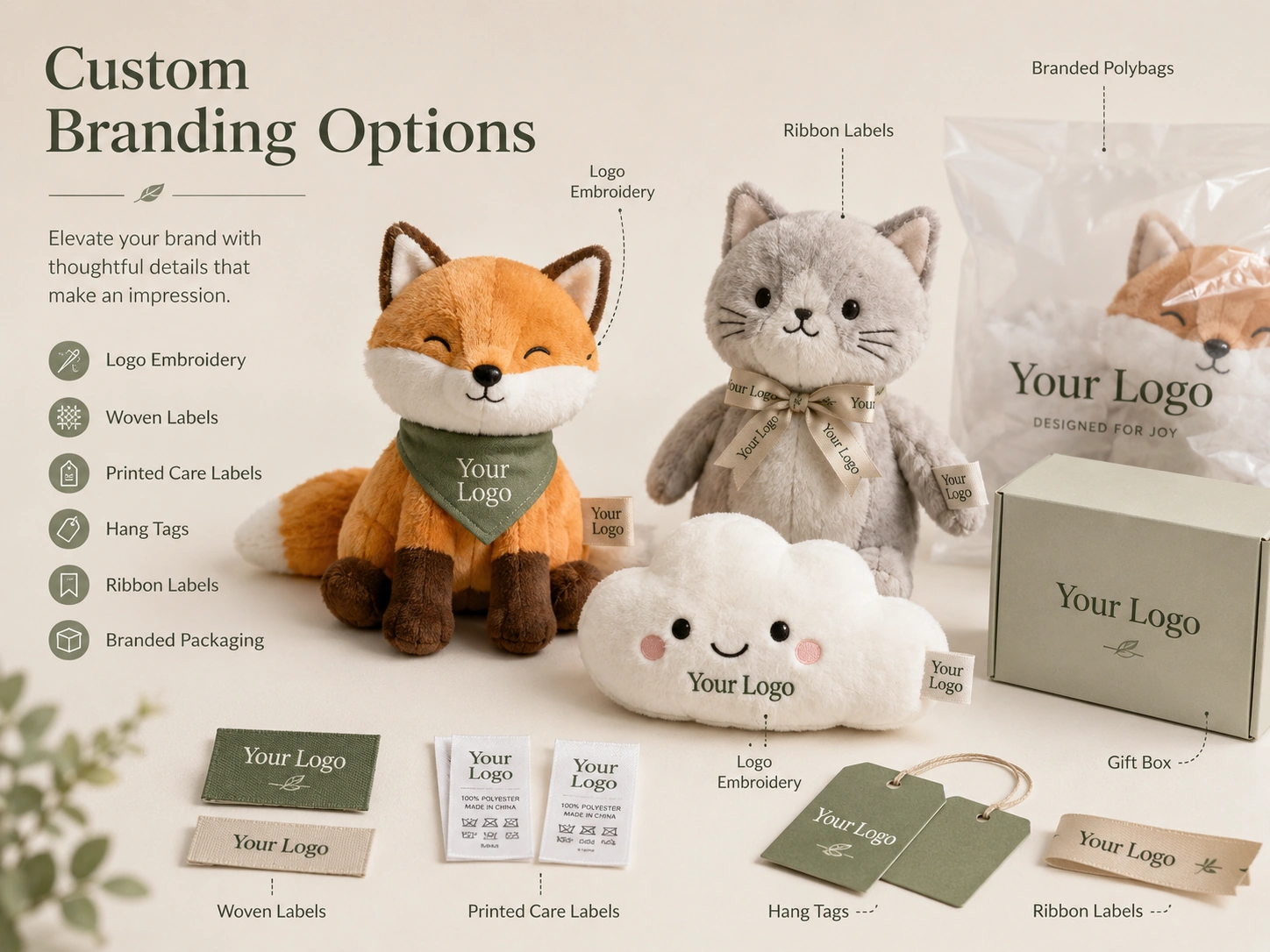
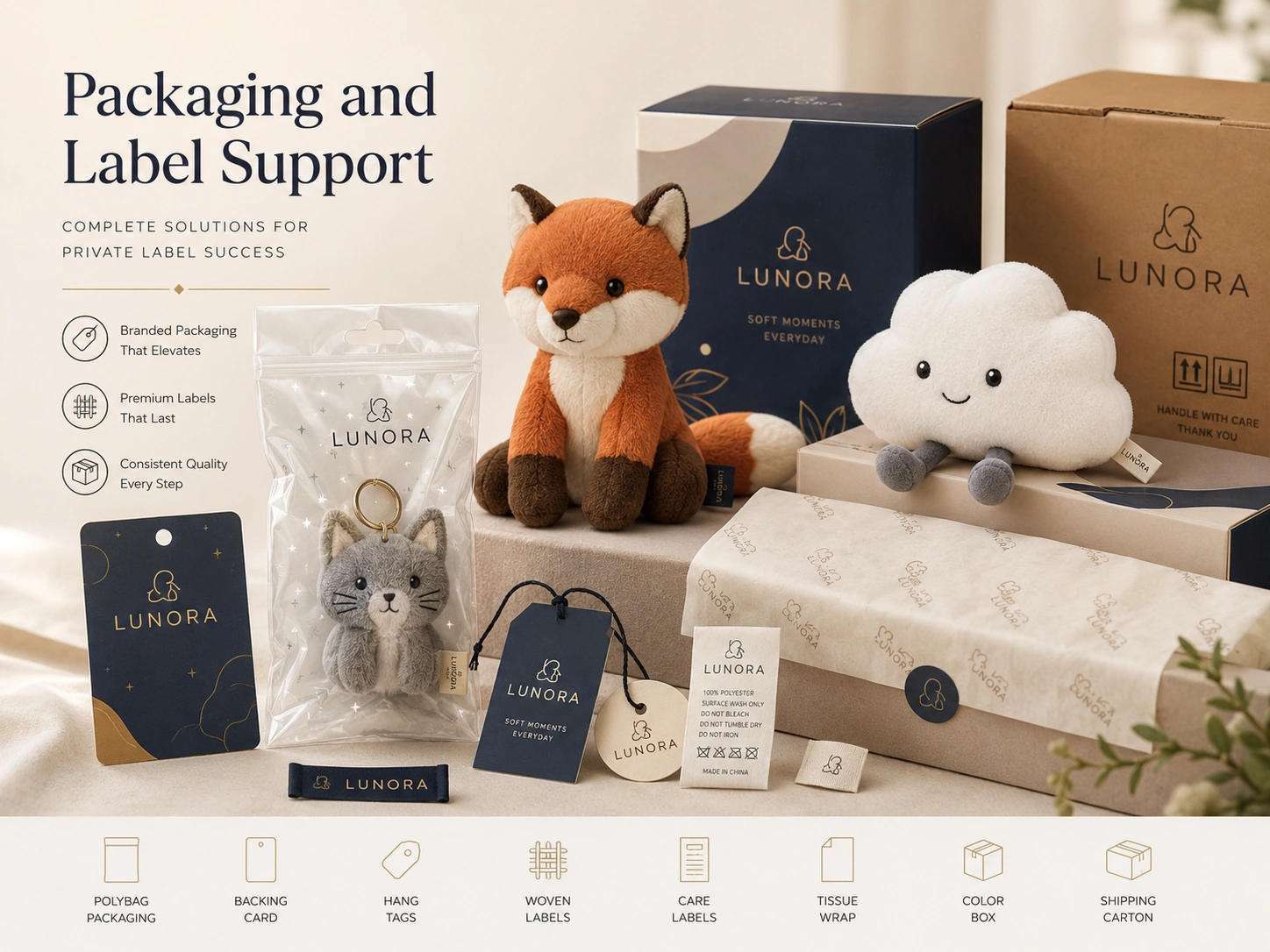
Branding is often what separates a private label plush product from a plain wholesale item. Buyers may need custom plush toys with logo labels, woven labels, printed care labels, hang tags, polybags, backing cards, color boxes or other packaging formats depending on the sales channel.
For Amazon and ecommerce sellers, packaging needs to balance presentation, compliance and shipping practicality. For retail stores, packaging may need to support shelf appeal and easier display. For gift companies, a branded unboxing experience may be part of the value.
Good packaging support does not mean offering every option to every buyer. It means helping the buyer select the options that match the product route, budget and market position.
OEM, ODM and Wholesale Support
In the plush category, OEM usually means the buyer brings a clearer concept or artwork and the factory supports sample development and production around that concept. ODM generally means the supplier can also support adaptation based on existing styles, structures or product ideas. In practice, many projects include elements of both.
Wholesale support is also important because some buyers need a path that starts with smaller quantities and grows into repeat orders. Others may need multiple SKUs in one project, while some only need a flagship plush item with branded packaging.
The right supplier should be able to explain where the project fits: custom development, style adaptation or a more scalable repeat-order program.
Small-Batch Testing and Bulk Production Planning
A common mistake in private label toys is to think only in terms of one large order. In reality, many buyers need to test first. A smaller launch helps validate packaging, market response, listing photography, gifting potential or display performance before the buyer commits to a larger run.
That is why a private label plush toy program should support both small-batch testing and bulk production planning. Small runs help buyers move faster with lower risk. Bulk runs require better scheduling, tighter packaging coordination and stronger quality control.
Standard MOQ is 3,000 pieces per design. Product size, fabric type, construction complexity and packaging affect specifications, sampling and pricing, but the stated MOQ remains standard MOQ of 3,000 pieces per design.
How to Evaluate a Private Label Plush Toy Supplier
Buyers comparing suppliers should look beyond unit price. A capable private label plush manufacturer should be able to explain how the sample process works, what branding elements are supported, how packaging is handled, how revisions are documented and how production quality is checked.
It also helps when the supplier can communicate clearly about what is easy, what is risky and what may need compromise. That is especially important for buyers sourcing private label felt toys or custom plush toys with logo details, where material feel and decorative elements can affect both appearance and production practicality.
At Toy Gift Supply, the focus is on helping buyers understand the development route before they commit. Our usual strengths include OEM/ODM development support; sample making and revision coordination; small-batch testing and bulk production planning; custom woven labels, hang tags and packaging support; export-oriented communication for overseas buyers; and quality control from sample approval to shipment.
What Buyers Usually Prepare Before Asking for a Quote
- Brand concept, style references or a rough product idea
- Target size, estimated order quantity and expected sales channel
- Logo label, hang tag and packaging requirements
- Launch timeline, sample target and preferred delivery window
Key Comparison Points Before You Choose a Supplier
| Buyer Decision | Why It Matters |
|---|---|
| Product direction | Clarify whether you need a signature plush, a small series, a mascot item or a repeatable branded line. |
| Brand presentation | Plan labels, hang tags, packaging and visual identity together instead of adding them after sampling. |
| Testing strategy | Decide whether you need a pilot order before a full production run. |
| Sales channel fit | Amazon, retail, gift and event channels often need different packaging and product priorities. |
| Supplier communication | A good supplier should explain risks, revisions, materials and production steps clearly. |
What Should a Private Label Plush Toy Manufacturer Control?
A private label plush toy manufacturer should control more than the plush body. Brand labels, hangtags, packaging artwork, SKU information and approved production specifications need to stay consistent from sample approval through reorders.
Continue your sourcing plan
These related pages help buyers plan product development, packaging and supplier communication more clearly.
FAQ – Private Label Plush Toys Manufacturer
What does private label plush toys mean?
Private label plush toys are plush products developed and produced for your own brand. The product may use your logo labels, hang tags, care labels, packaging and brand presentation instead of the factory’s own branding.
Can we start with only an idea, sketch or reference image?
Yes. Many buyers start with a rough concept, mascot idea, moodboard or product reference. The key is to discuss the target size, structure, material, expression and packaging direction before sampling starts.
Do you support small-batch testing before bulk production?
Yes. Many private label toy projects start with a controlled test order before a larger production run. The practical starting quantity depends on the plush size, fabric, complexity, accessories and packaging requirements.
What branding details can be customized?
Common options include woven labels, printed labels, care labels, hang tags, logo embroidery, printed polybags, backing cards, tissue wrap, color boxes and shipping cartons.
Can you produce licensed plush toys?
We support plush production for brands, IP owners and authorized buyers who have legal rights to the artwork or character. We do not position licensed plush as open production without authorization.
Who is this page most suitable for?
This page is for Amazon sellers, ecommerce brands, gift companies, retailers, wholesalers, schools, event buyers and brand teams that need private label plush development, sampling and bulk production support.
Continue to the relevant sourcing page
Review factory capabilities, MOQ, sampling, packaging and quotation requirements for this project route.
Private Label Plush Toy Manufacturing →Core manufacturer pages
Review our manufacturing services, real factory route and quotation requirements before starting a project.
Ready to Launch a Private Label Plush Project?
Send your concept, target size, quantity, logo and packaging requirements. We will review your project and reply with practical advice on sampling, MOQ and bulk production planning.