TGS factory project fit · Updated August 29, 2026
Toy Gift Supply is a bulk custom plush manufacturer for established brands, retailers, licensed programs and funded merchandise projects. Our standard MOQ is 3,000 pieces per design.
- Required before quotation or sampling: front, side and back views with finished dimensions.
- A single AI-generated image may show the concept, but it is not a production-ready drawing.
- Buyers must own the original character or have authorization to manufacture it.
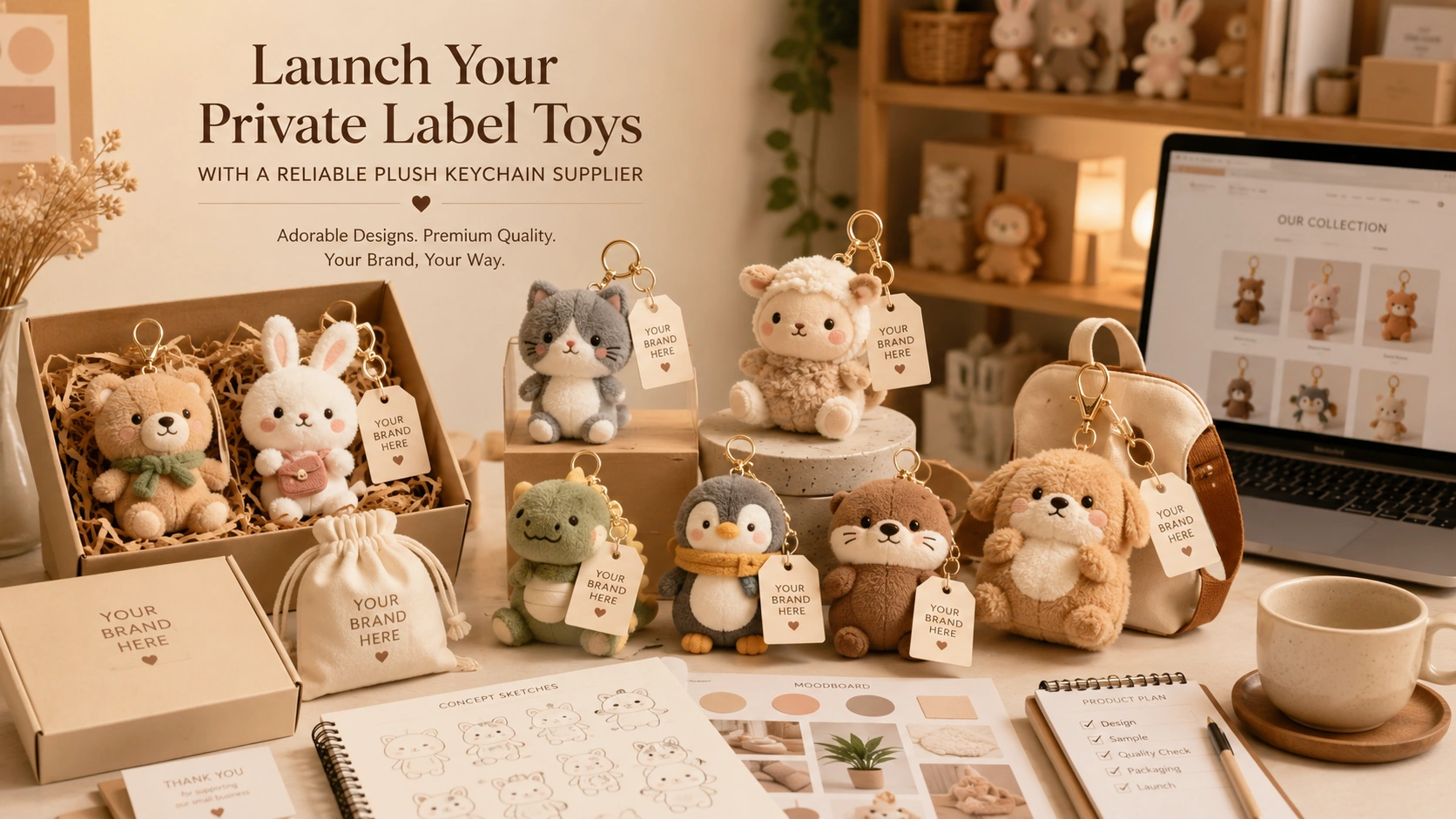
Mini plush keychains can be a low-risk way for independent sellers to test a brand concept, build a collectible line and move toward a shelf-ready collection.
What This Guide Helps Buyers Decide
For entrepreneurs, indie brands and ecommerce sellers, the goal is not to compete head-on with the biggest toy companies. The better opportunity is often in finding a small but meaningful niche, then building a product line that feels original, giftable and easy to test in the market.
This guide explains why many new sellers should start with mini plush keychains when building a private label toys business, how to screen a reliable plush toy supplier, and what to prepare before requesting a quote or sample.
Why Start with Mini Plush Keychains Instead of a Full Toy Line?
Mini plush keychains are one of the most practical starting points for private label toys. They usually require less material, less packaging space and a lower first-order commitment than a wider plush assortment. That makes them easier to test when you are still validating your niche, your pricing and your brand style.
They also match current buying behavior well. Younger buyers often want products that are cute, collectible, display-friendly and easy to attach to bags, keys, pouches or desk setups. A small plush charm can be a toy, a lifestyle accessory and a social-media-friendly product at the same time.
For a startup or independent seller, this means you can move faster. Instead of launching an entire range with high inventory pressure, you can test one or two strong character ideas, collect customer feedback, then expand based on what sells best.
The Real Opportunity: Small, Focused Private Label Collections
The most promising private label toy launches usually start with a focused concept. That could be a calming animal theme, a café-inspired plush line, a travel mascot, a seasonal gift collection or a cute collectible brand for online communities. A niche collection gives your brand a point of view and makes packaging, photography and product storytelling easier.
Mini plush keychains are especially effective for this because they allow multiple SKUs without the same financial pressure as large toys. A small collection can feel broad enough for discovery, but still controlled enough for a new brand to manage.
Key Comparison Points Before You Request a Quote
Before contacting a factory, compare the decisions below. These points help clarify whether your project is still at the concept stage, ready for sampling or close to launch.
| # | Buyer Decision | Why It Matters |
|---|---|---|
| 1 | Niche idea and target buyer | A clear audience helps you decide character style, packaging, price point and sales channel. |
| 2 | Mini plush keychain format | Smaller plush products reduce material cost, simplify early testing and support impulse buying. |
| 3 | Sampling speed and revision process | A responsive supplier helps you move from artwork to a physical sample faster and with fewer mistakes. |
| 4 | Eco-friendly materials | Fabric, recycled filling and packaging choices affect brand story, product feel and buyer trust. |
| 5 | Safety and compliance checks | Small products still need reliable stitching, safe materials and documentation that fits the target market. |
| 6 | Retail packaging and presentation | A strong unboxing look makes a simple plush keychain feel like a branded collection, not a generic item. |
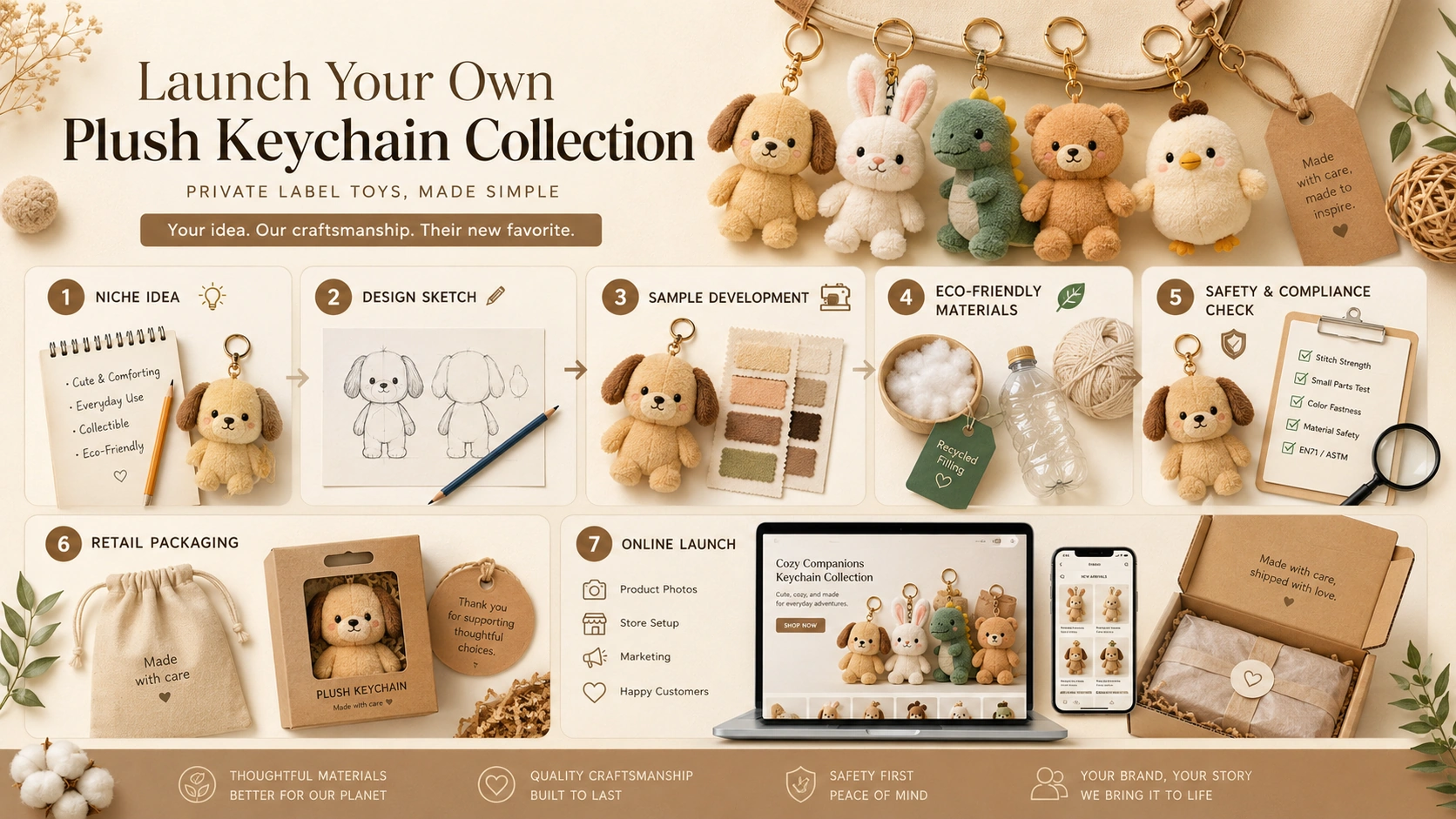
A strong private label launch process starts with a clear niche, then moves through design, sampling, eco materials, compliance and retail presentation.
How to Screen a Reliable Plush Toy Supplier
A good supplier should do more than manufacture. They should help you reduce mistakes. For a startup brand, that means clear communication, honest sampling feedback and a process that makes the project easier to move forward.
When comparing plush suppliers, pay attention to three things first: sampling speed, material quality and compliance awareness. If a supplier cannot explain how quickly they can develop a sample, what eco-friendly material options they offer, or what quality checks they use for small attachment products, that is an early warning sign.
Toy Gift Supply’s private label advantage should be positioned around practical execution: faster sample turnaround, support with branded packaging, eco-friendly material options and clear production communication. Buyers need confidence that their design can move from file to shelf-ready product without unnecessary delays.
Common Mistakes New Private Label Sellers Should Avoid
Many new sellers overbuild too early. They launch too many characters, too many colors or too many packaging variations before they have market feedback. That creates inventory risk and makes reorder planning harder.
- Trying to launch too many designs before validating demand
- Choosing a supplier based only on the lowest price
- Ignoring sampling speed and revision clarity
- Using weak hardware for keychains or bag charms
- Leaving packaging decisions until after production starts
- Skipping material or compliance questions for a small accessory product
Another mistake is assuming that a small product needs less quality control. In reality, plush keychains need strong stitching, secure hardware and carefully managed dimensions because every design detail becomes more visible at a smaller size.
What to Prepare Before Asking for a Free Quote
You do not need a fully finished brand manual to start. But the more clearly you describe your idea, the faster a supplier can guide you. Even a moodboard, rough character sketch or packaging reference can improve the quotation process significantly.
- Your artwork, moodboard or character concept
- Target customer and selling channel
- Estimated quantity and launch timeline
- Preferred size, attachment hardware and color direction
- Packaging ideas such as header card, window box, pouch or backing card
- Any eco-material or compliance expectations
If your product is aimed at a niche online audience, mention that too. Your target buyer affects the recommended size, material softness, packaging style and price structure.
How Toy Gift Supply Can Help Bring Your Concept to Shelf
Toy Gift Supply supports private label plush projects for entrepreneurs, ecommerce sellers and branded merchandise buyers. For mini plush keychains, the focus is on helping you build a launchable collection, not just a standalone sample. That includes sample development, material review, hardware selection, packaging direction and bulk-order planning.
If you want a product that feels thoughtful and brand-ready, a supplier should help you connect product design with packaging and launch strategy. The best outcomes happen when the buyer and factory treat the project as a collection from the beginning, not as a one-off custom item.
Private-Label Keychains Can Become a Collectible Product Line
A custom plush keychain manufacturer can support one character first and then expand the approved construction into a larger series. For a private label collectible plush launch, use consistent labels, backing cards and SKU rules across characters. The custom plush keychain MOQ should be checked per design because a multi-character collection divides the total order across individual SKUs.
What makes a private label plush keychain launch factory-ready?
A private label plush keychain launch needs more than a concept image. Buyers should define the character, finished size, attachment hardware, label, retail packaging and quantity per design before asking a factory to quote.
For TGS, a plush keychain sourcing program starts at 3,000 pieces per design and requires consistent front, side and back drawings with dimensions. This page supports the manufacturing offer without replacing the dedicated private-label and mini-plush-keychain product pages.
Continue your sourcing plan
These related guides help buyers move from design ideas to packaging, sampling and a more reliable launch plan.
Ready to turn your design into a private label plush collection?
Send your artwork, moodboard or rough character sketch to Toy Gift Supply and get a free quote for private label plush keychains, packaging and sample development.